
Are you thinking about setting up a small football pitch or training zone in your garden? Here are some quick tips to help you create a football training space at home.
The ideal setup depends on your garden size, the player's age and ability, and the skills they want to develop. With the right space and equipment, your garden can become a great place to train.
1. Check the accessibility of your garden
First of all, measure your available garden space. This will help you choose the right goal and training equipment for your setup.
Consider the type of surface you have, whether it’s grass, artificial grass or patio, and make sure the training area is clear of obstacles such as furniture, plants, walls or other objects.
Your available space will determine how you set up your training area:
-
Small garden: Focus on close-control skills, passing, first touch and accuracy using compact equipment.
-
Medium garden: Create separate areas for passing, dribbling and shooting, with enough space to move between them.
-
Large garden: You can create a more complete training area with a larger goal, shooting zone, passing area and space for speed and agility work.
2. Choose the right football goal
Want to learn more about choosing the right football goal? Check out our [Football Goal Size Chart] for a more detailed guide to goal sizes, player age and garden space.

When choosing a goal, consider three key factors: available garden space, the player’s age and ability, and the purpose of your training. A smaller goal may be ideal for shooting accuracy, while a larger goal can provide a more match-like training experience.
The table below gives you a quick guide to choosing a goal based on your garden size:
|
Garden Size |
Suggested Goal |
Best For |
|
Small |
6ft x 4ft |
Shooting & accuracy |
|
Medium |
8ft x 4ft / 8ft x 6ft |
General training |
|
Large |
12ft x 6ft+ |
Match-style training |
3. Create Your Own Training Zones
|
Garden Size |
Suggested Goal |
Recommended Equipment |
Best For |
|
Small Garden |
Urban Mini Goal 3' x 2.5' or Urban 4ft Pop-Up Goals |
⚽ Urban Ball + Urban Skills Trainer + Urban Mini Goal |
Ball control, dribbling, passing, first touch & shooting |
|
Medium Garden |
Urban Match Goal 6ft x 4ft or 8ft x 4ft |
⚽ Urban Ball + Urban Skills Trainer + Urban Goal Target Sheet + Urban Skills Set |
Passing, first touch, dribbling, shooting & accuracy |
|
Large Garden |
Urban Match Goal 8ft x 6ft or 12ft x 6ft |
⚽ Urban Ball + goal + Urban Dual Speed Rebounder + Target Sheet + Octa Speed Rings |
Shooting, passing, ball control, agility & more varied training |
You don't need a full-size football pitch or lots of expensive equipment to train effectively at home. With just a football, you can already practise important skills such as ball control, dribbling and ball mastery.
Once you have your ball, you can create different training zones around your garden using either football training equipment or simple DIY alternatives. The key is to choose each zone based on the skill you want to improve.
Shooting & Finishing Zone
What you need:
-
Football
-
Football goal or target
-
Cones or markers (optional)
If you have enough space, set up a football goal to practise shooting and finishing. Choose specific areas of the goal, such as the top or bottom corners, and challenge yourself to hit different targets.
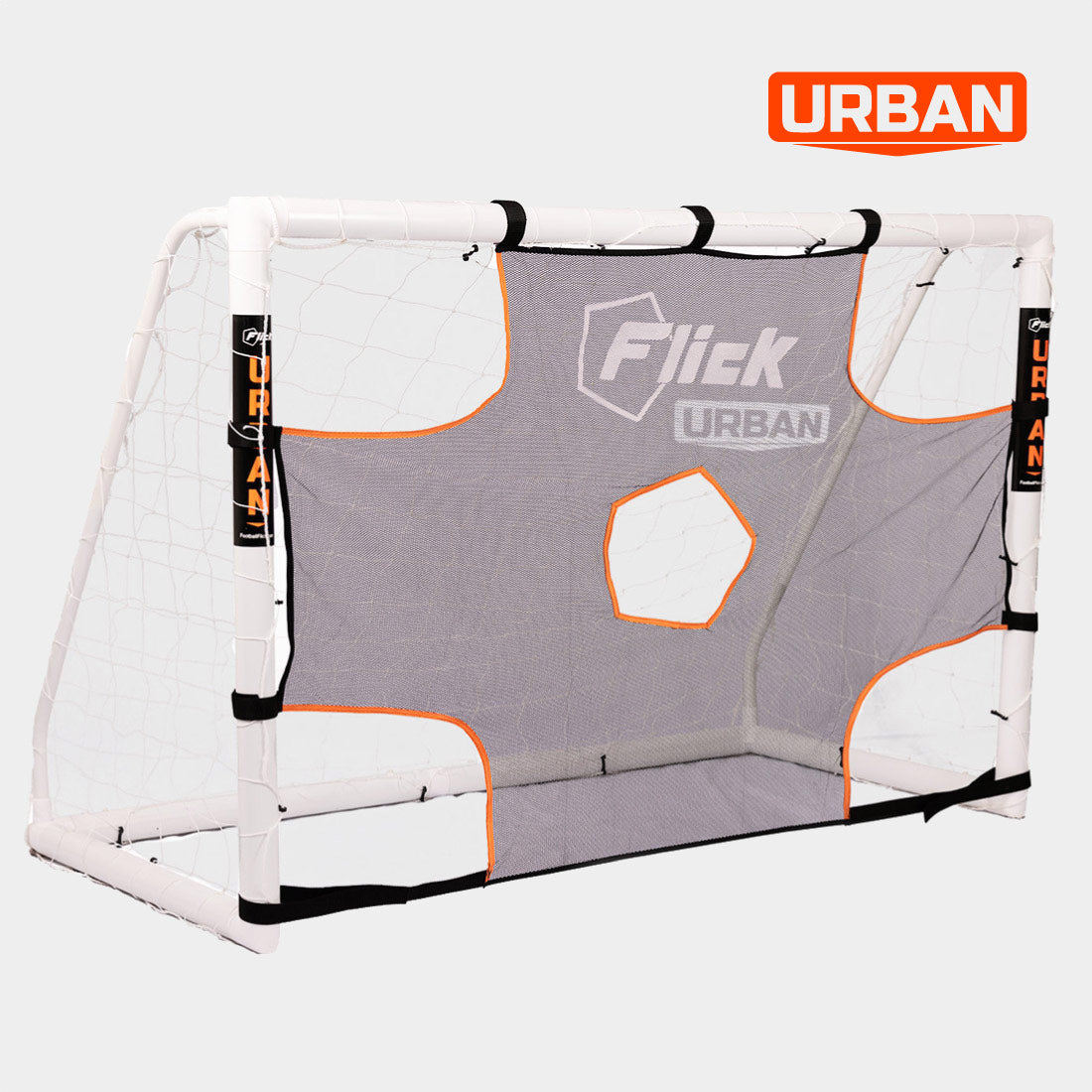
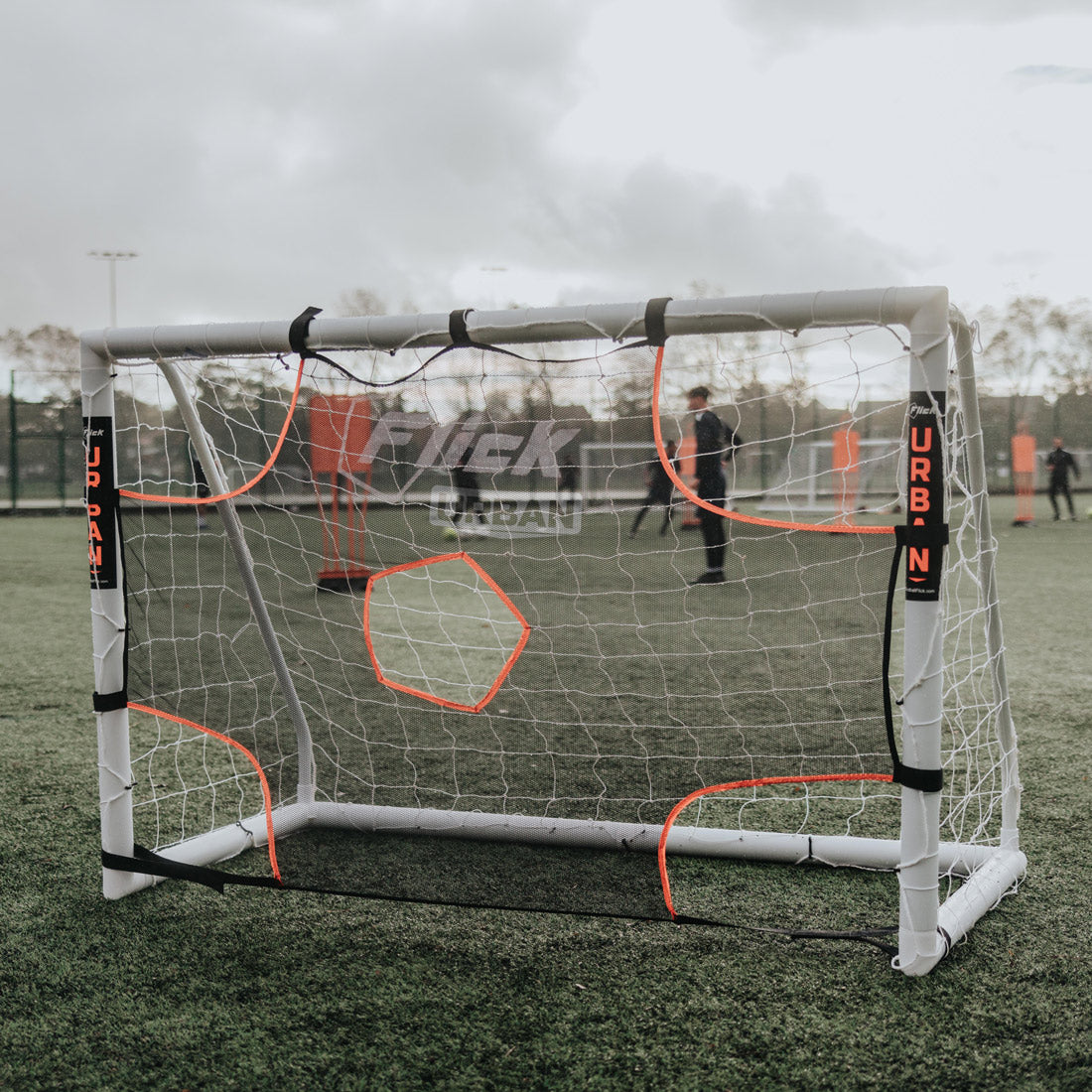
The Urban Target Goal is another option if you want to combine target practice with regular goal training, as it can be transformed from a target goal into a normal goal.

DIY option:
No goal or target? You can still practise shooting accuracy by creating safe targets on a suitable wall or using objects as visual targets. Always make sure the area is safe and that nothing breakable is nearby.
Passing & First-Touch Zone
What you need:
-
Football
-
Rebounder or suitable wall
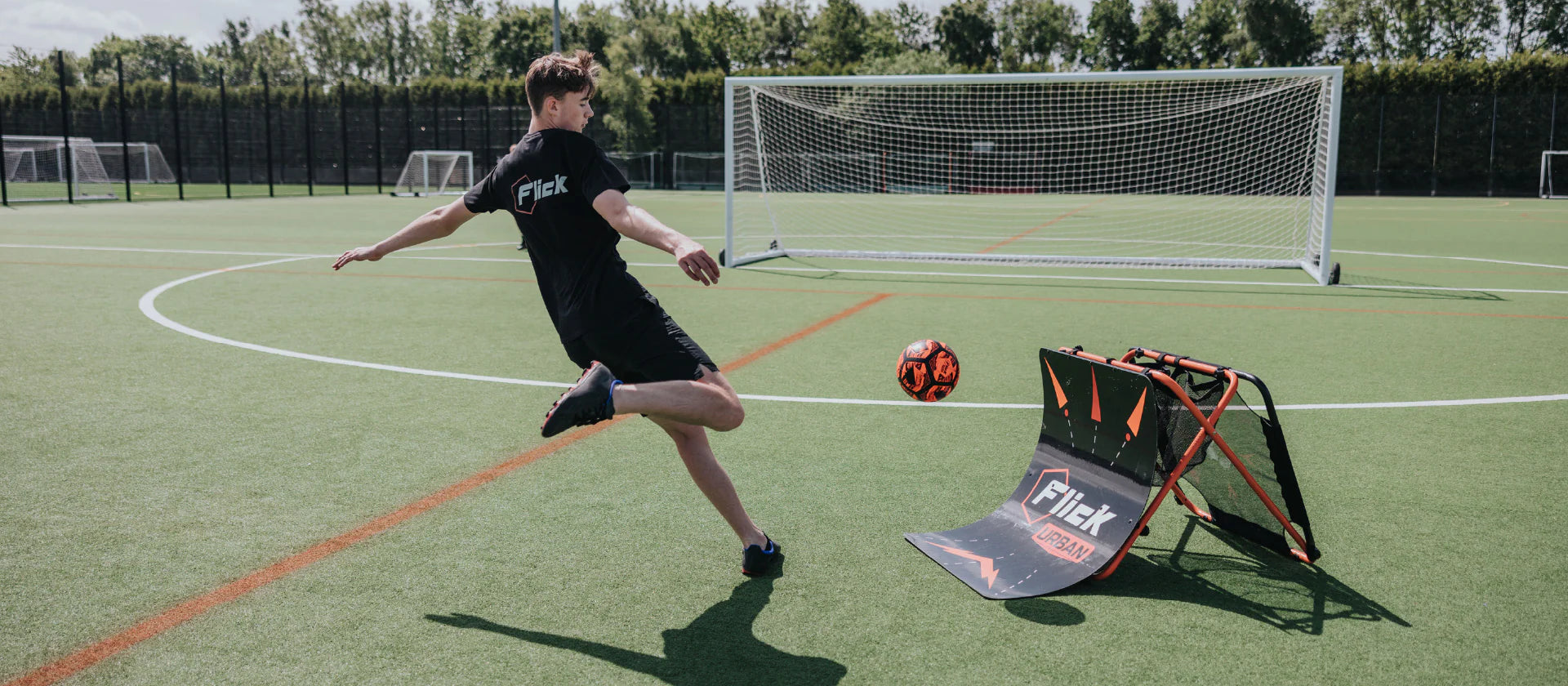
A rebounder can help you practise passing and receiving the ball when you're training alone. Pass the ball against the rebounder and focus on controlling it with your first touch before playing the next pass.
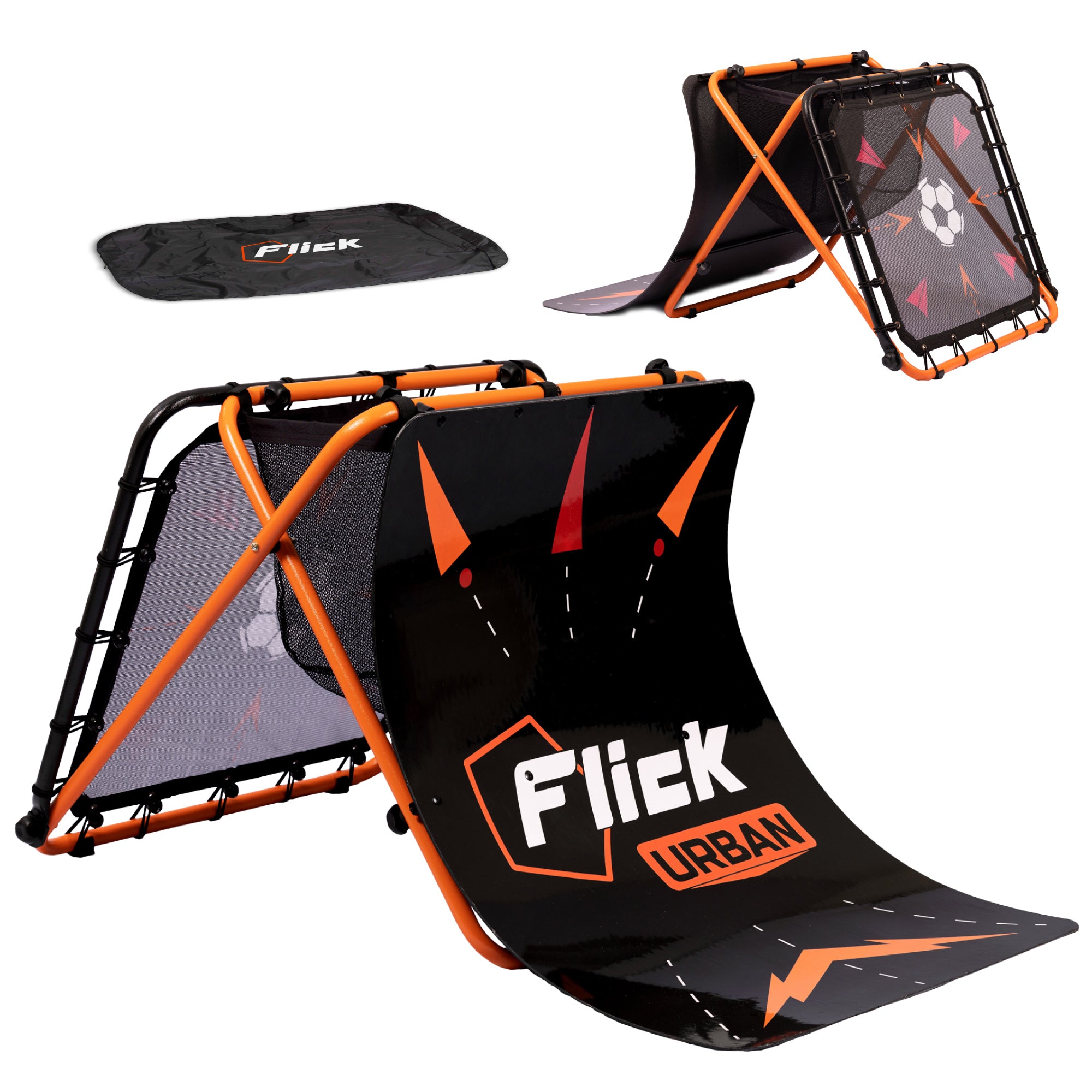
The Urban Skills Trainer offers several ways to practise, including passing, shooting, dribbling and ball control, making it a compact option for smaller training spaces.

DIY option:
If you don't have a rebounder, a safe and sturdy wall can work as a simple passing partner. Practise passing with both feet and controlling the ball with your first touch.
Speed & Agility Zone
What you need:
-
Football
-
Cones or markers (optional)
You don't need a huge space to work on speed and agility. Use a small area of your garden to practise quick feet, changes of direction and short bursts of acceleration.
Set up a few markers and weave between them, then finish with a short sprint. You can also repeat the course while dribbling the ball to combine agility with ball control.
DIY option:
Use water bottles or other safe household objects as markers if you don't have cones. Keep the course short and make sure there is enough space around you to move safely.
4. Tips for a Small Garden
Having a small garden doesn't mean you can't create an effective football training zone. The key is to make the most of the space you have and choose equipment that can do more than one job.
Start with a football and use the space you have for ball mastery, dribbling and close-control exercises. A wall can become a passing partner, while water bottles can be used as DIY cones.
If you want to add equipment, choose compact and versatile options. For example, the Urban Skills Trainer combines four training functions in one piece of equipment, making it useful when you don't have room for several different training products.

You can also choose equipment that is easy to move or pack away after training, allowing your garden to remain a normal family space when you're not practising.
5. Garden Football Training Safety Tips
Before you start your training session, take a few simple precautions to make sure your garden is a safe place to train.
-
Check the training area: Remove toys, garden furniture, stones, branches or anything else that could cause you to trip or get injured.
-
Secure your goal: Always make sure your football goal is properly secured before use, particularly when practising powerful shots.
-
Leave enough space: Keep a safe distance between your training equipment and walls, fences, windows or other obstacles.
-
Check the surface: Avoid training on wet, slippery or uneven surfaces where possible. Make sure you have enough grip to move and change direction safely.
-
Keep the area clear: Make sure other people, pets and objects are out of the training area while you're practising.
-
Pack away equipment: Once you've finished training, store your equipment safely so the garden is clear and ready for everyday use.